GEMINI: Generalized Ensnarlment Measure from Incomplete-linkage of Network-network Interactions
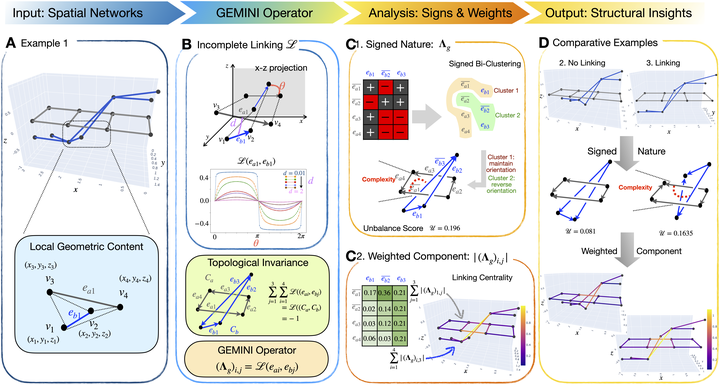 Figure 1. Illustration of the GEMINI operator.
Abstract
Spatially embedded networks are central to many physical and biological systems, where geometry and connectivity jointly shape structure and function. Examples abound across the scales of biological organization, from network-like membrane-bound organelles to mesoscale tissue organization of distinct flow networks in organs and beyond. In each of these cases, the complexity of the architectures has heretofore frustrated our ability to link mechanism or regulation of these structures to reduced modeling or relevant characterization, putting structure-function relationships largely out of reach. Functional spatial networks can be decomposed into tree-like and cyclic substructures, but we still lack both an understanding of how these elements intertwine to yield function, and the tools to holistically quantify the topological and geometric aspects of these features in their full network context. To close this gap, we here introduce GEMINI, a topology and geometry aware operator that directly characterizes incomplete linking and general spatial associations between edges in spatially embedded networks. GEMINI contains information on edge-edge association through an incomplete version of the Gauss linking integral which simultaneously endows it with topological sensitivity when collections of edges form linked assemblages. Validation on both synthetic lattices and on mouse brain vasculature demonstrates that GEMINI systematically captures and classifies the complexity of structural organizations. Our results provide a general approach for analyzing spatial networks in realistic data, where topology and geometry together determine function, opening the door to a more complete understanding of structure-function relationships across a broad set of biological examples where complex network organization is key.